
Culture & History
Sicilian coisine
May 2026 · 4 min read
Sicilian Cuisine: A Story of Peoples, Encounters and Identity
In Sicily, cuisine is born not only from the land or the sea, but from history itself.
Every dish tells the story of a people who once called the island home. Every ingredient carries the legacy of a civilization, and every recipe reflects a dialogue between cultures that, for more than three thousand years, have shaped Sicily into what it is today.
It is this remarkable layering of influences that makes Sicilian gastronomy one of the richest and most fascinating culinary traditions in the Mediterranean. Rather than a single cuisine, Sicily offers a mosaic of regional traditions that have coexisted and evolved for centuries, preserving a delicate balance between heritage and innovation.
An Island at the Heart of the Mediterranean
Thanks to its strategic location, Sicily has long served as a natural bridge between Europe, Africa and the Middle East. Phoenicians, Greeks, Romans, Byzantines, Arabs, Normans, Swabians, Aragonese and Spaniards all ruled the island at different points in history, leaving their mark not only on its architecture and language, but also on its culinary identity.
The Greeks introduced a sophisticated culture of wine, olive oil and wheat cultivation, laying the foundations of what we now recognise as the Mediterranean diet.
The Romans expanded agricultural production, transforming Sicily into one of the Empire's most important granaries.
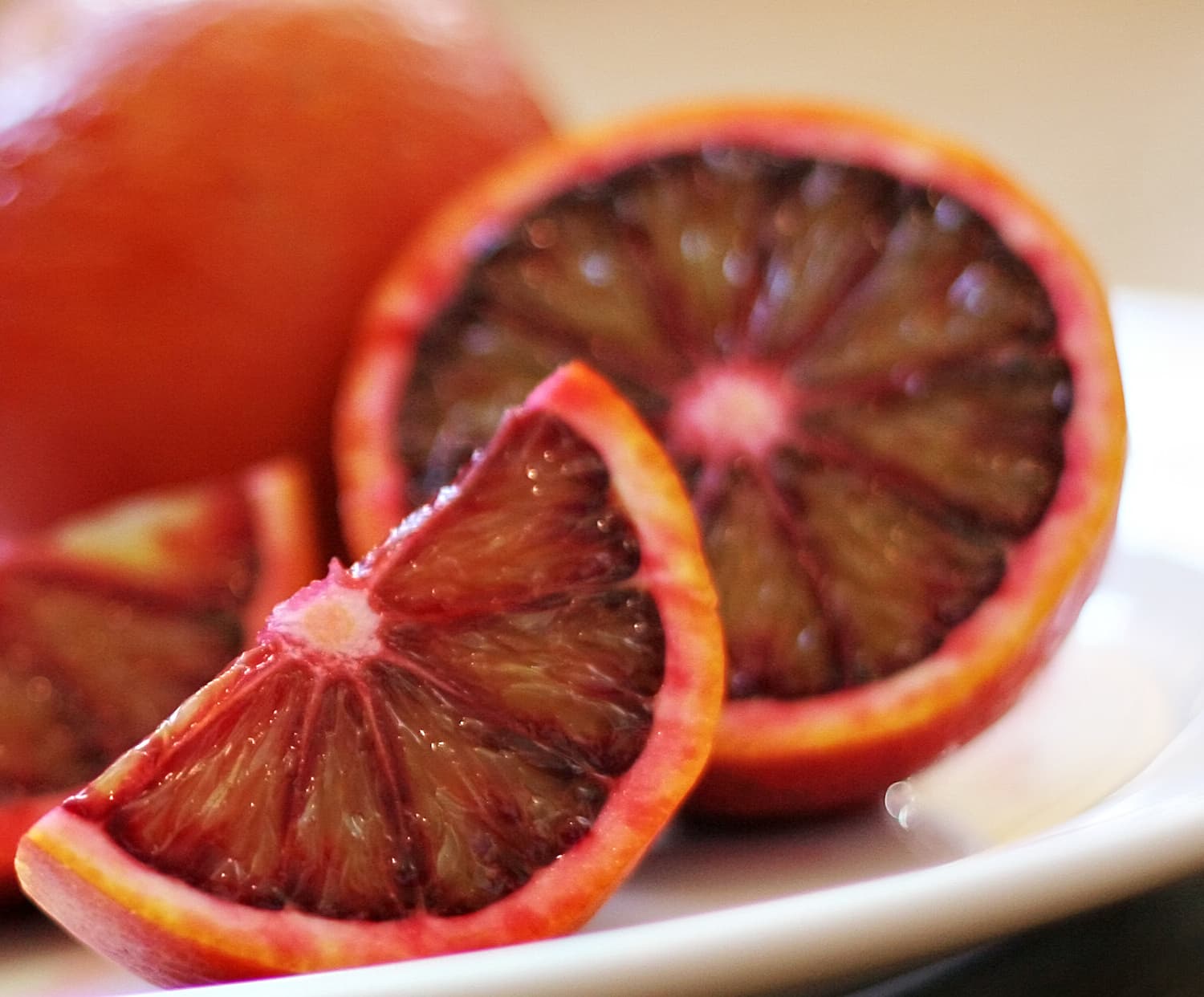
It was the Arabs, however, between the ninth and eleventh centuries, who profoundly reshaped both the island's landscape and its cuisine. They introduced advanced irrigation systems together with new crops such as citrus fruits, lemons, bitter oranges, pistachios, almonds, sugar cane, aubergines, rice and precious spices including saffron, cinnamon and cloves. They also inspired the extraordinary tradition of desserts made with ricotta, almonds and sugar, which remains one of the defining features of Sicilian pastry today.
The arrival of the Normans and subsequent European rulers brought new livestock farming techniques, a broader use of meat and a refined courtly cuisine that gradually merged with local traditions, creating a gastronomic heritage unlike any other.
Sicilian cuisine is therefore the result of a continuous encounter between East and West, where ingredients, techniques and traditions from distant worlds have blended into a remarkably harmonious whole.
A Cuisine That Changes from Province to Province
To speak of Sicilian cuisine is, in reality, to speak of many different cuisines.
Along the western coast, tuna, couscous, blue fish and strong Arab influences define the local table.
Eastern Sicily is celebrated for its pistachios, citrus fruits, ricotta, seafood from the Ionian Sea and an extraordinary pastry tradition.
Further inland, a more rustic cuisine prevails, built upon ancient grains, legumes, local cheeses, wild mushrooms, carefully raised meats and traditional breads still prepared according to rituals passed down through generations.
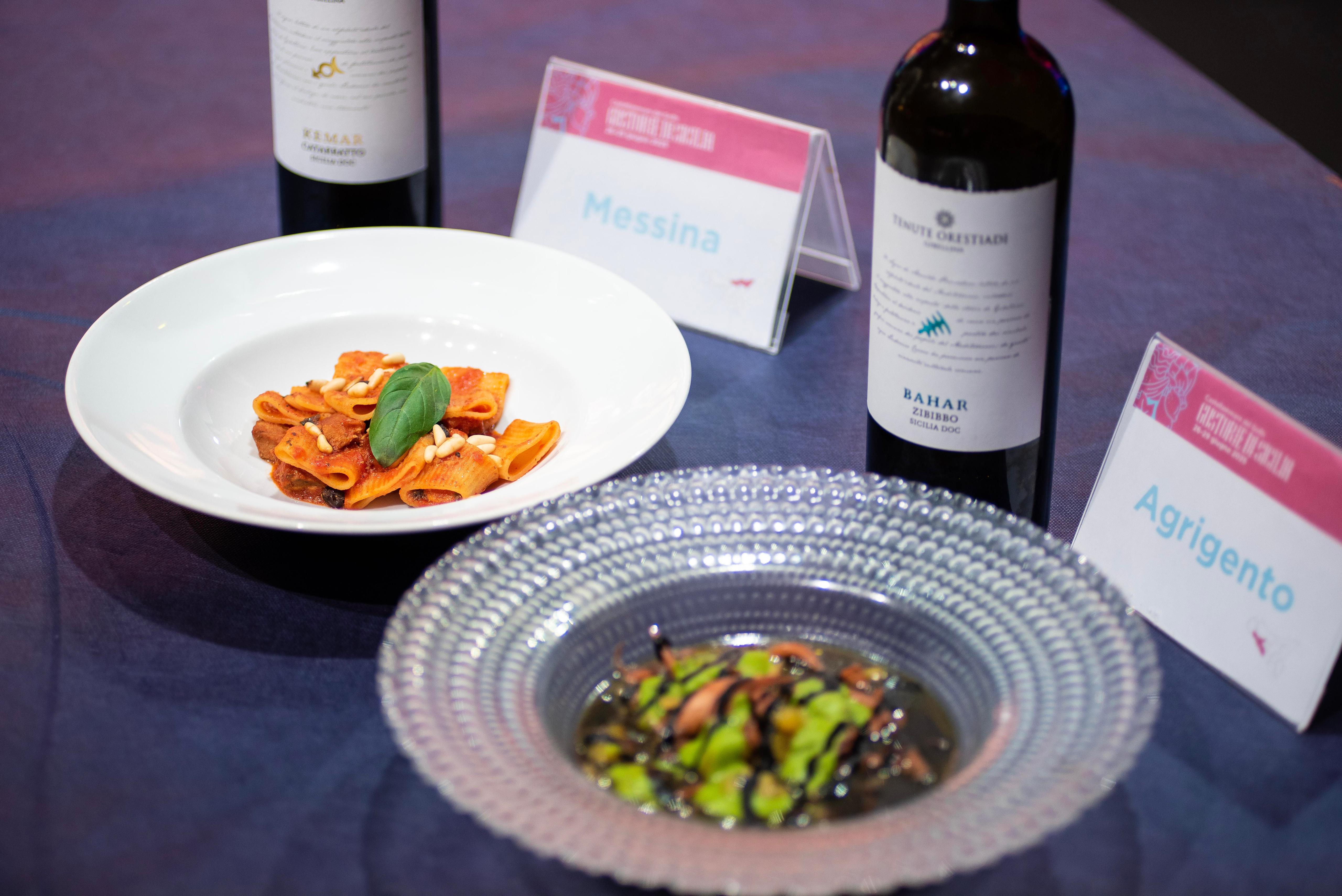
Each region tells a different story of Sicily, yet all share the same respect for seasonality, exceptional ingredients and the timeless value of gathering around the table.
To dine in Sicily is to become part of a story that continues to unfold every day.
Palermo: Street Food as Cultural Heritage
Few cities in Europe possess a street food culture as vibrant and deeply rooted as Palermo.
Within the historic markets of Ballarò, Vucciria and Capo, food is far more than a quick meal—it is an expression of the city's identity.
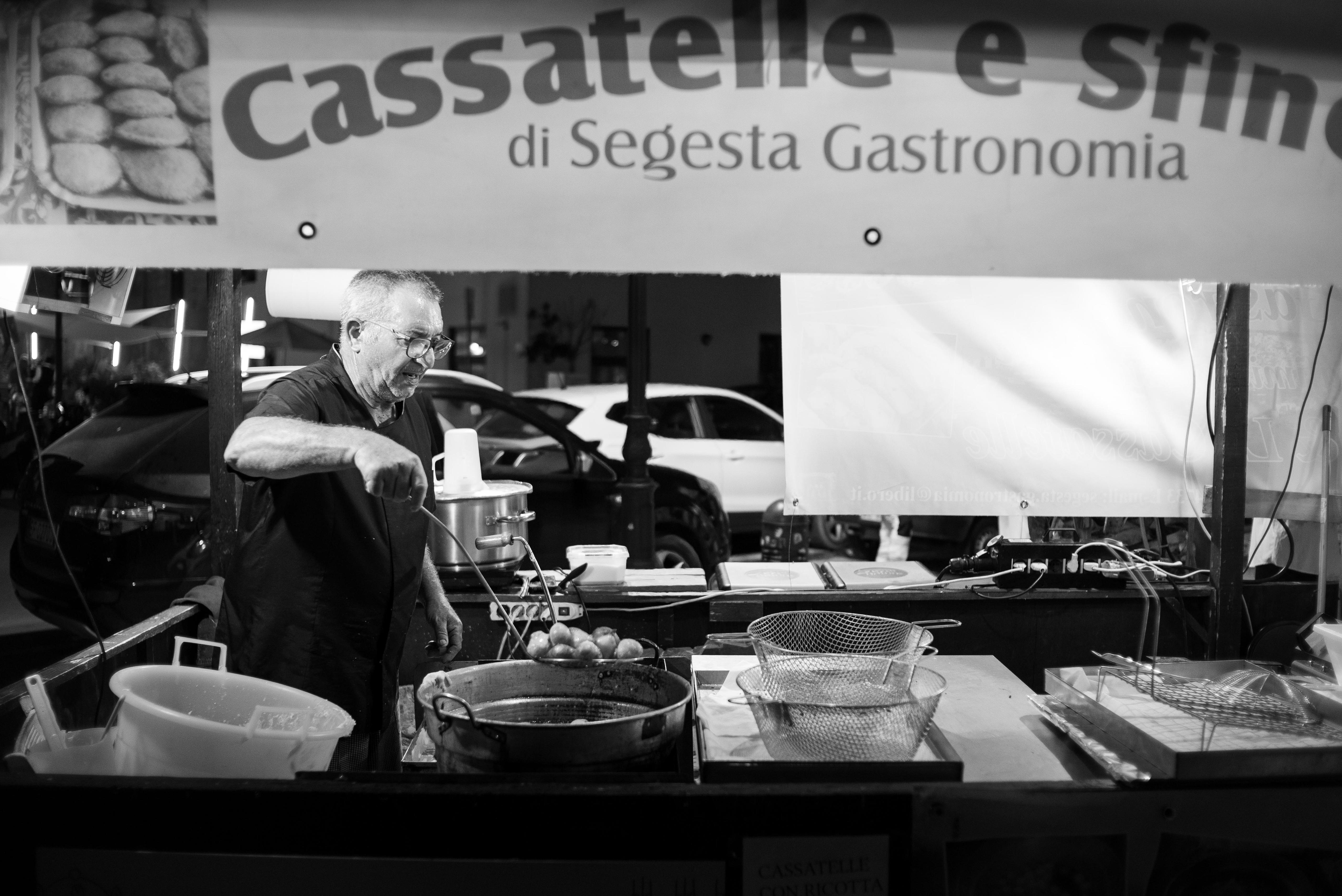
Among the most iconic specialities are pani câ meusa (veal spleen sandwich), a legacy of Palermo's Jewish community; panelle, delicate chickpea fritters; crocchè, traditional potato croquettes; sfincione, the city's beloved soft focaccia topped with tomato, onions and caciocavallo cheese; and the famous arancini, which in Palermo are characteristically round.
Every market stall tells the story of a family, a craft and recipes preserved across generations. Palermo's street food reflects the city's multicultural soul, where Arab, Spanish, French and Jewish influences continue to coexist in every bite.
Catania: The Spirit of Mount Etna on the Plate
If Palermo tells the story of cultural layers, Catania expresses the raw energy of its landscape.
Life revolves around La Pescheria, the city's historic fish market, where the rhythm of daily life mirrors the deep relationship between the sea and Mount Etna.
Here, street food reveals a bolder, more robust character.
The Catanian arancino is traditionally cone-shaped, evoking the silhouette of the volcano itself. Alongside it are cipolline, flaky pastries filled with onion, tomato and cheese; cartocciate, savoury stuffed pastries with a variety of fillings; and the celebrated scacciate, rustic stuffed breads traditionally prepared during the Christmas season.
Another local speciality is grilled horse meat, served in traditional street kiosks and deeply rooted in the city's culinary heritage.
Like Sicilian cuisine as a whole, Catania's street food transforms humble ingredients into dishes of extraordinary character and authenticity.
A Living Culinary Heritage
Sicilian cuisine belongs not only to the past, but very much to the present.
It continues to evolve through the work of chefs, winemakers, farmers, fishermen, artisans and producers who reinterpret centuries-old traditions while remaining faithful to their origins.
This ability to embrace change without losing its identity is what makes Sicilian gastronomy one of the island's most authentic cultural expressions.
For those who visit Sicily, every meal becomes far more than a culinary experience.
It is a journey through the civilizations that shaped the Mediterranean—told through ingredients, aromas and recipes that continue to thrive today.
What readers are saying
All comments from our readers about this article
There are no comments for this story yet.
Leave a thought
Share a reaction, a story, a memory you experienced in Sicily and create with us this magic digital space.
Related stories
Newsletter
A slower way to experience Sicily.
Subscribe to the newsletter to receive Journal content and much more straight to your inbox.